Understanding the Deflationary Mechanics of Burning Crypto Tokens
The cryptocurrency landscape is constantly evolving, with various mechanisms designed to influence the supply and demand of digital assets. One such mechanism is the process of burning crypto tokens, which plays a crucial role in creating a deflationary environment. This article delves into the intricacies of token burning, its implications for the cryptocurrency market, and how it can affect the value of digital assets.
What is Token Burning?
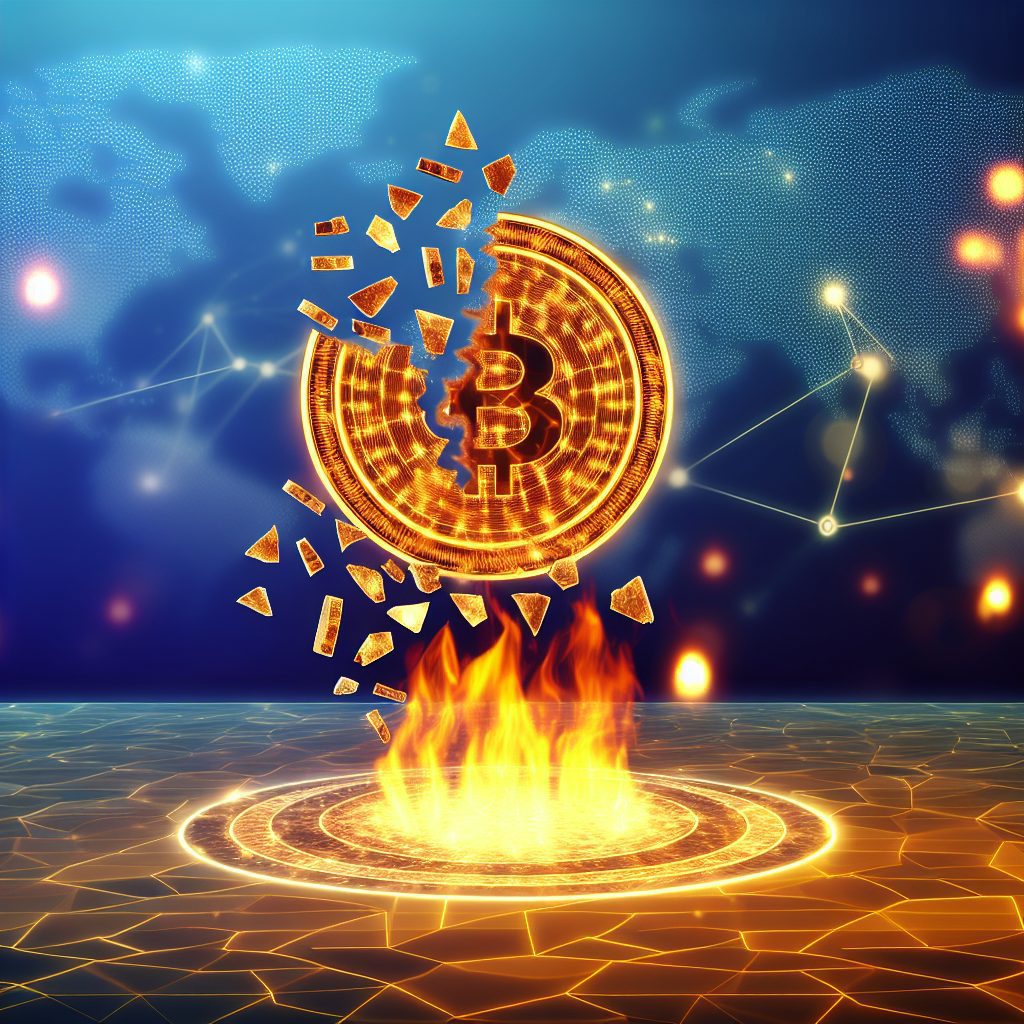
Token burning refers to the deliberate process of removing a certain number of tokens from circulation, effectively reducing the total supply. This is typically achieved by sending tokens to a wallet address that is inaccessible, often referred to as a “burn address.” Once tokens are sent to this address, they cannot be retrieved or used again, leading to a decrease in the overall supply of that cryptocurrency.
The primary goal of token burning is to create scarcity, which can potentially increase the value of the remaining tokens. By reducing the supply, the demand for the remaining tokens may rise, leading to an appreciation in price. This mechanism is particularly prevalent in cryptocurrencies that aim to establish a deflationary model.
The Mechanics of Deflation in Crypto
Deflation in the cryptocurrency context refers to a decrease in the overall supply of tokens, which can lead to an increase in their value. This is in contrast to inflation, where the supply of tokens increases, often leading to a decrease in value. The mechanics of deflation in crypto can be understood through several key concepts:
- Supply and Demand: The fundamental economic principle that governs the value of any asset. When the supply of a cryptocurrency decreases while demand remains constant or increases, the price typically rises.
- Market Sentiment: The perception of investors regarding the future value of a cryptocurrency can influence demand. Positive sentiment can lead to increased buying activity, further driving up prices.
- Utility and Adoption: The more a cryptocurrency is used and adopted for various applications, the higher the demand. Burning tokens can enhance the perceived value and utility of a cryptocurrency.
How Token Burning Works
Token burning can occur through various methods, each with its own implications for the cryptocurrency ecosystem. Here are some common approaches:
1. Scheduled Burns
Some cryptocurrencies implement a scheduled burning mechanism, where a specific number of tokens are burned at regular intervals. For example, the Binance Coin (BNB) has a quarterly burn schedule, where a portion of the total supply is permanently removed from circulation.
2. Transaction Fees
In certain blockchain networks, a portion of transaction fees is burned. This method not only reduces the supply but also incentivizes users to engage in transactions, as they contribute to the deflationary process. Ethereum’s EIP-1559 upgrade introduced a fee-burning mechanism that has significantly impacted the supply dynamics of ETH.
3. Community Votes
Some projects allow their communities to vote on whether to burn tokens. This democratic approach can enhance community engagement and ensure that the burning process aligns with the interests of token holders.
Real-World Applications of Token Burning
Token burning has been successfully implemented in various cryptocurrencies, showcasing its effectiveness in creating a deflationary environment. Here are a few notable examples:
Binance Coin (BNB)
Binance Coin is one of the most prominent examples of a cryptocurrency that employs a token burning mechanism. Binance conducts quarterly burns, where a portion of BNB is permanently removed from circulation based on the trading volume on its exchange. This strategy has contributed to the appreciation of BNB’s value over time, making it one of the top cryptocurrencies by market capitalization.
Ethereum (ETH)
The introduction of EIP-1559 in Ethereum’s London Hard Fork marked a significant shift in how transaction fees are handled. With this upgrade, a portion of the transaction fees is burned, leading to a deflationary effect on ETH. As a result, Ethereum has experienced periods of deflation, where the supply of ETH decreases, positively impacting its price.
Shiba Inu (SHIB)
Shiba Inu, a meme-based cryptocurrency, has also adopted token burning as a strategy to enhance its value proposition. The community actively participates in burning SHIB tokens through various initiatives, including charity events and community-driven projects. This approach has helped maintain interest and engagement within the Shiba Inu community.
The Impact of Token Burning on Price Dynamics
The relationship between token burning and price dynamics is complex and influenced by various factors. While burning tokens can create scarcity, it does not guarantee an increase in price. Here are some key considerations:
1. Market Conditions
The overall market conditions play a significant role in determining how effective token burning will be in influencing price. In a bullish market, the impact of burning may be more pronounced as demand increases. Conversely, in a bearish market, even significant burns may not lead to price appreciation.
2. Investor Sentiment
Investor sentiment can greatly affect the perceived value of a cryptocurrency. If the community views token burning positively, it can lead to increased demand and higher prices. However, if investors are skeptical or view the burn as a gimmick, the impact may be muted.
3. Utility and Use Cases
The utility of a cryptocurrency also plays a crucial role in its price dynamics. If a token has strong use cases and is widely adopted, burning tokens can enhance its value proposition. On the other hand, if a token lacks utility, burning may not significantly impact its price.
Challenges and Criticisms of Token Burning
While token burning can be an effective strategy for creating a deflationary environment, it is not without its challenges and criticisms:
1. Lack of Transparency
In some cases, the process of token burning may lack transparency, leading to skepticism among investors. If the community does not have clear visibility into how many tokens are burned and when, it can undermine trust in the project.
2. Short-Term Focus
Token burning can sometimes lead to a short-term focus on price appreciation rather than long-term sustainability. Projects that prioritize burning over building a robust ecosystem may struggle to maintain interest and value over time.
3. Market Manipulation
There are concerns that token burning can be used as a tool for market manipulation. If a project artificially inflates its value through aggressive burning without genuine demand, it can lead to a bubble that eventually bursts.
Future Trends in Token Burning
As the cryptocurrency industry continues to evolve, token burning is likely to play an increasingly important role in shaping market dynamics. Here are some potential future trends:
1. Increased Adoption of Deflationary Models
More projects may adopt deflationary models that incorporate token burning as a core mechanism. This could lead to a broader acceptance of cryptocurrencies that prioritize scarcity and value appreciation.
2. Enhanced Community Engagement
Projects may focus on enhancing community engagement through token burning initiatives. By involving the community in the decision-making process, projects can foster loyalty and support.
3. Integration with DeFi and NFTs
Token burning may become more integrated with decentralized finance (DeFi) and non-fungible tokens (NFTs). As these sectors grow, innovative burning mechanisms could emerge, further influencing supply dynamics.
FAQs about Token Burning
What happens to burned tokens?
Once tokens are burned, they are sent to a wallet address that is inaccessible, meaning they cannot be retrieved or used again. This permanently reduces the total supply of that cryptocurrency.
Does token burning guarantee price increases?
While token burning can create scarcity and potentially lead to price increases, it does not guarantee that prices will rise. Market conditions, investor sentiment, and utility also play significant roles.
Are all cryptocurrencies deflationary?
No, not all cryptocurrencies are deflationary. Some cryptocurrencies have inflationary models where the supply increases over time, while others may implement deflationary mechanisms like token burning.
How can I track token burns?
Many cryptocurrency projects provide transparency regarding their token burns through official announcements and blockchain explorers. Websites like Bitrabo can also provide insights into token supply changes.
Conclusion
Understanding the deflationary mechanics of burning crypto tokens is essential for anyone involved in the cryptocurrency market. Token burning serves as a powerful tool for creating scarcity, influencing supply dynamics, and potentially enhancing the value of digital assets. However, it is crucial to consider the broader market context, investor sentiment, and the utility of the cryptocurrency in question.
As the industry continues to evolve, token burning will likely remain a significant aspect of many projects, shaping the future of cryptocurrencies. For the latest news and updates on cryptocurrency prices, consider visiting Bitrabo. Stay connected with me on social media: X, Instagram, Facebook, and Threads.
Disclaimer: This article is for informational purposes only and should not be considered financial advice. Always conduct your own research before investing in cryptocurrencies.
The Crypto Watchlist of the Week 🔎
Subscribe to receive expert-curated projects with real potential—plus trends, risks, and insights that matter. Get handpicked crypto projects, deep analysis & market updates delivered to you.