How Blockchain Handles Censorship Resistance in the Cryptocurrency Industry
The concept of censorship resistance is one of the foundational principles of blockchain technology, particularly within the cryptocurrency industry. As digital currencies continue to gain traction, understanding how blockchain facilitates censorship resistance becomes increasingly vital. This article delves into the mechanisms that enable blockchain to resist censorship, the implications for users and developers, and real-world applications that highlight its effectiveness.
Understanding Censorship Resistance
Censorship resistance refers to the ability of a system to prevent any single entity from controlling or restricting access to information or transactions. In the context of blockchain, this means that no central authority can alter, block, or delete data stored on the blockchain. This characteristic is crucial for maintaining the integrity and trustworthiness of cryptocurrencies.
The Role of Decentralization
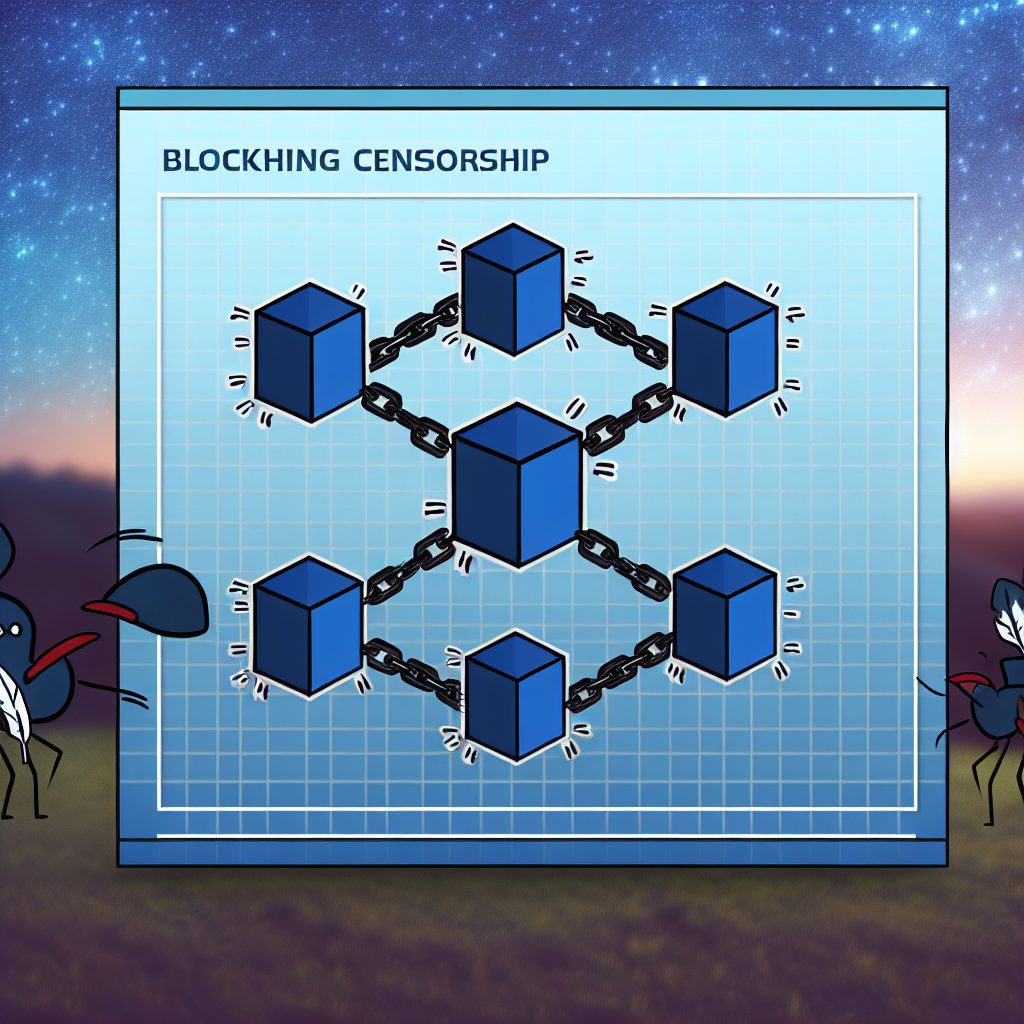
At the heart of blockchain technology is decentralization. Unlike traditional financial systems that rely on central authorities, blockchains operate on a network of nodes that validate transactions. This decentralized structure is what makes censorship resistance possible.
- Distributed Ledger: Each participant in the network has a copy of the entire blockchain, making it nearly impossible for any single entity to manipulate the data.
- Consensus Mechanisms: Blockchains use various consensus algorithms (like Proof of Work and Proof of Stake) to validate transactions, ensuring that no single party can control the outcome.
- Permissionless Access: Anyone can join the network and participate in the validation process, further enhancing resistance to censorship.
How Blockchain Achieves Censorship Resistance
Blockchain achieves censorship resistance through several key features:
1. Immutable Records
Once a transaction is recorded on a blockchain, it cannot be altered or deleted. This immutability is achieved through cryptographic hashing, which links each block to the previous one. Any attempt to change a block would require altering all subsequent blocks, which is computationally infeasible in a large network.
2. Transparency and Auditability
Blockchain transactions are transparent and can be audited by anyone. This transparency ensures that all participants can verify the integrity of the data, making it difficult for any party to engage in censorship without being detected.
3. Anonymity and Pseudonymity
Many cryptocurrencies offer a degree of anonymity or pseudonymity, allowing users to transact without revealing their identities. This feature protects users from potential censorship based on their identity or transaction history.
4. Global Accessibility
Blockchain networks are accessible from anywhere in the world, provided there is internet connectivity. This global reach means that users in regions with oppressive regimes can still access financial services without fear of censorship.
Real-World Applications of Censorship Resistance
Several real-world applications demonstrate how blockchain’s censorship resistance is being utilized effectively:
1. Bitcoin and Financial Freedom
Bitcoin, the first cryptocurrency, was created as a response to the financial crisis of 2008. It allows individuals to transact without relying on banks or governments. In countries with strict capital controls, such as Venezuela, Bitcoin has become a lifeline for citizens seeking to preserve their wealth and conduct transactions freely.
2. Ethereum and Decentralized Applications (dApps)
Ethereum has enabled the development of decentralized applications (dApps) that operate on its blockchain. These applications can provide services without a central authority, making them resistant to censorship. For instance, platforms like EtherDelta allow users to trade tokens without the risk of being shut down by regulatory bodies.
3. Social Media Platforms
Decentralized social media platforms, such as Mastodon, leverage blockchain technology to provide users with a space free from censorship. These platforms allow users to share content without fear of being banned or having their posts removed by a central authority.
The Challenges of Censorship Resistance
While blockchain offers significant advantages in terms of censorship resistance, it is not without challenges:
1. Regulatory Pressures
Governments around the world are increasingly scrutinizing cryptocurrencies. Regulatory actions can lead to exchanges being shut down or restricted, which can indirectly affect users’ ability to access their funds.
2. Network Attacks
Although blockchains are designed to be secure, they are not immune to attacks. A 51% attack, where a single entity gains control of the majority of the network’s mining power, can potentially allow for censorship of transactions.
3. User Education
For blockchain to be truly censorship-resistant, users must understand how to use it effectively. Lack of knowledge can lead to reliance on centralized exchanges, which can be vulnerable to censorship.
Future of Censorship Resistance in Blockchain
The future of censorship resistance in blockchain technology looks promising. As more individuals and organizations recognize the importance of decentralization, the demand for censorship-resistant solutions will likely grow. Innovations such as layer 2 solutions and interoperability protocols are being developed to enhance the scalability and usability of blockchain networks, further solidifying their role in resisting censorship.
FAQs about Censorship Resistance in Blockchain
What is censorship resistance in blockchain?
Censorship resistance in blockchain refers to the ability of the technology to prevent any single entity from controlling or restricting access to information or transactions on the network.
How does decentralization contribute to censorship resistance?
Decentralization distributes control across a network of nodes, making it difficult for any single entity to manipulate or censor data.
Can blockchain be censored?
While blockchain is designed to be censorship-resistant, it can face challenges from regulatory pressures and network attacks that may limit access to certain services.
What are some examples of censorship-resistant applications?
Examples include Bitcoin for financial transactions, Ethereum for decentralized applications, and decentralized social media platforms like Mastodon.
Conclusion
Blockchain technology’s inherent characteristics make it a powerful tool for achieving censorship resistance. By leveraging decentralization, immutability, and transparency, blockchain empowers users to transact freely and securely. As the cryptocurrency industry continues to evolve, the importance of censorship resistance will only grow, making it essential for users and developers alike to understand and embrace these principles. For the latest updates on cryptocurrency news and price tracking, visit Bitrabo. Follow me on social media for more insights: X, Instagram, Facebook, Threads.
Disclaimer: This article is for informational purposes only and should not be considered financial advice. Always conduct your own research before making investment decisions.
The Crypto Watchlist of the Week 🔎
Subscribe to receive expert-curated projects with real potential—plus trends, risks, and insights that matter. Get handpicked crypto projects, deep analysis & market updates delivered to you.